PERFECO advises companies in areas such as laboratory automation, raw materials technology, and the development of formulations in the field of paints and coatings. Are there any exciting practical examples?
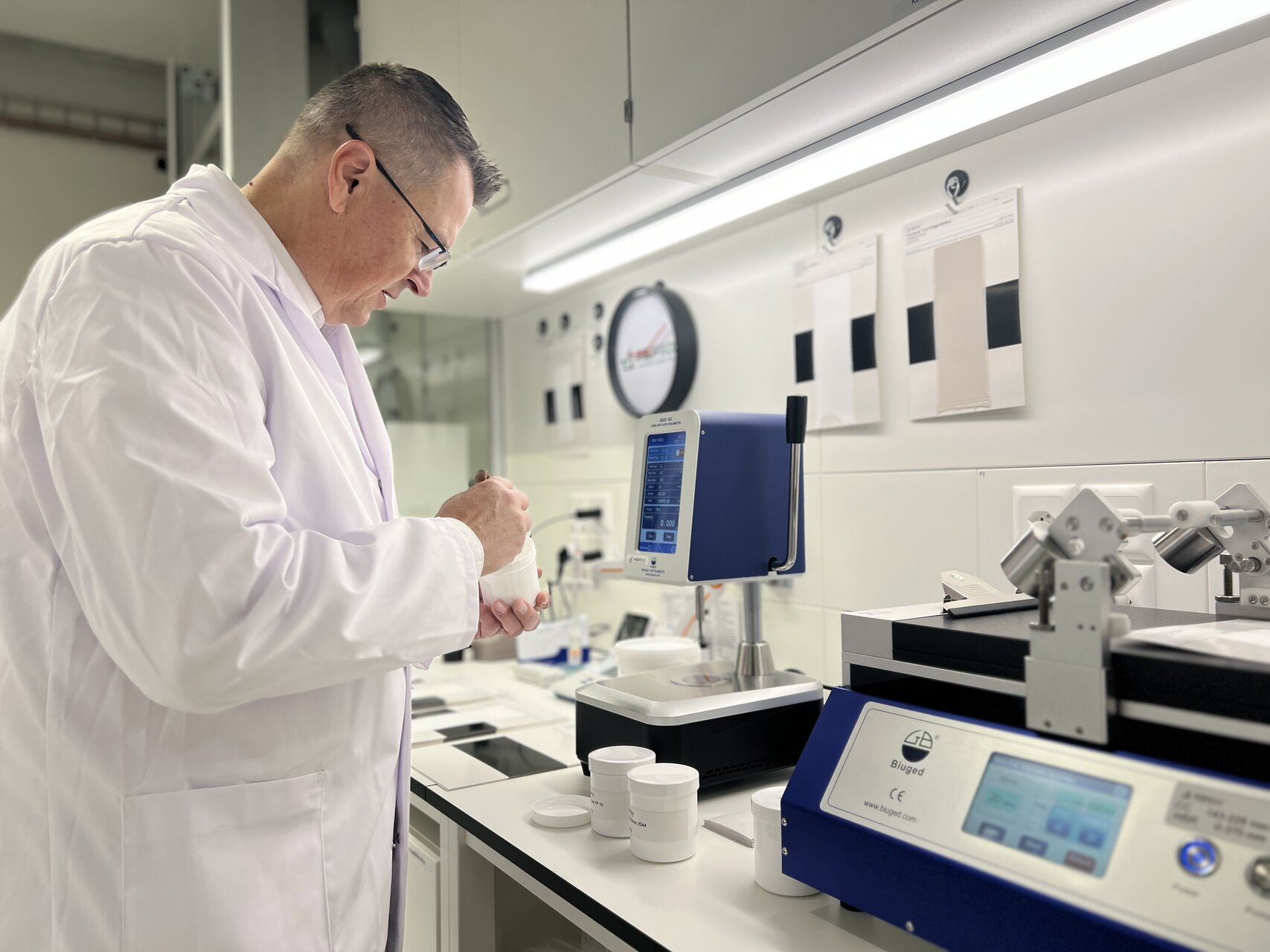
Detlef Gysau: Yes, practical experience shows very well how broad and at the same time deep this strategic consulting can be. In one example from laboratory automation, a company was faced with the challenge of efficiently formulating and testing hundreds of recipes. By analyzing the manual workflow, it was possible to show how throughput and reproducibility could be massively increased. In another example, a paint and coatings manufacturer was looking for alternatives to a critical additive that was subject to regulatory restrictions. Working together, the formulations were then optimized using bio-based additives and fillers.
You worked for large companies for many years. What motivated you to start your own startup—and why at Park Innovaare?
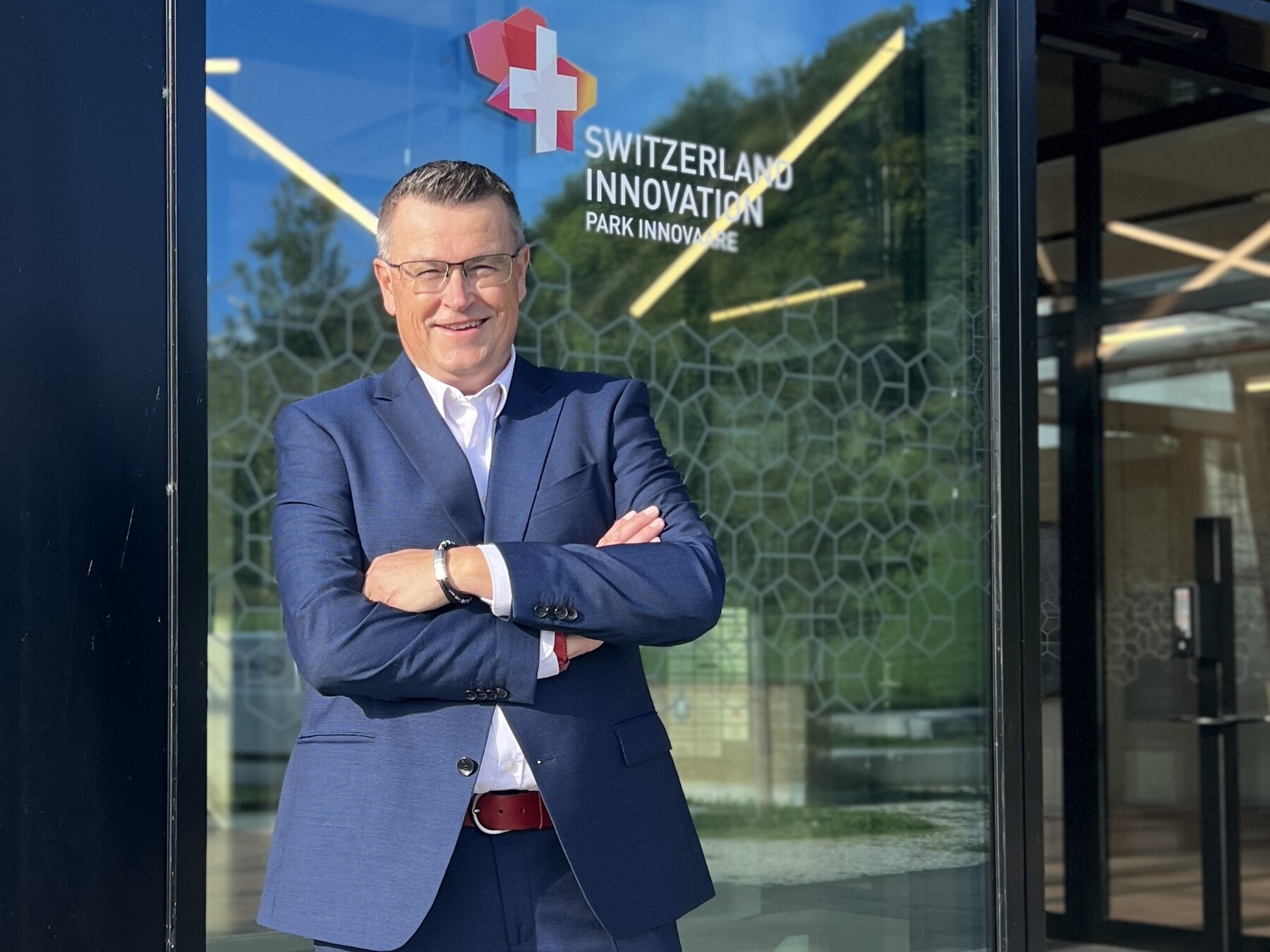
Detlef Gysau: I worked for large companies for around 36 years. By founding my own company, I benefit from short processes, flexibility, and speed. This was also one of the reasons why I settled at Park Innovaare. Here, I found the opportunity to set up my office and modern laboratory in one place. There are many research-based startups here with brilliant ideas and inventive spirit, as well as proximity to Switzerland's largest research location, the Paul Scherrer Institute (PSI).
You are the author of various specialist books, such as “Filler” and “Fillers for Paints.” Where do you see the greatest potential for innovation in the future?
Detlef Gysau: The interfaces between digitalization, sustainability, and life sciences are the hotspots for innovation. Those who conduct research and invest in these areas are actively shaping the future. In the field of sustainability and circular economy, we will develop new materials and processes that are climate-neutral, enable recycling and upcycling, and replace fossil raw materials with bio-based alternatives. AI-supported simulations, digital twins, and automated laboratory systems are greatly accelerating research and enabling new materials and products to be developed at unprecedented speeds.
Artificial intelligence has quickly found its way into laboratories. Where has AI already established itself in laboratories, and where has it not yet done so?
Detlef Gysau: AI is already an integral part of modern laboratories, especially in areas where large amounts of data have to be processed. AI-supported modeling allows the properties of materials or active ingredients to be predicted before they are even synthesized in the laboratory. This saves time and resources. However, AI is not yet fully established in fields that require a high degree of creativity, intuition, and experience. Many breakthroughs arise from out-of-the-box thinking and intuition between disciplines – this is where humans are currently still unbeatable. AI is therefore already indispensable for efficiency, speed, and data intelligence in the laboratory. But it does not replace human creativity and scientific judgment – rather, it reinforces them.
Where is AI currently being used in the field of paints, coatings, and fillers?
Detlef Gysau: In paint and coating development, AI has only been used selectively so far, but not across the board. AI-supported systems analyze color tones and formulations faster and more accurately than conventional methods. They help to minimize color deviations and ensure reproducibility. Machine learning algorithms can be used to simulate countless combinations of binders, pigments, additives, and fillers. Sensors in production provide real-time data. AI evaluates this data and detects deviations immediately—long before traditional QA methods would react.
Bio-based or recycled materials are very popular. Can you give a few examples of applications? What are the advantages and disadvantages?
Detlef Gysau: Yes, the trend toward sustainable raw materials is also very present in our industry. Examples include fillers made from quarry waste, carbon black from old tires, etc. Bio-based and recycled materials represent a major step toward a circular economy and climate protection. The advantages are the reduction of fossil raw materials, a better carbon footprint, and in some cases even better properties. The disadvantage at present is that they do not achieve the same performance as conventional raw materials in all applications. Fluctuating quality, availability, and price are also sometimes complicating factors.
Technical performance, cost efficiency, sustainability, and regulation—what do you see as the biggest challenges facing the industry?
Detlef Gysau: All four aspects are crucial, but they often conflict with each other. The pressure on manufacturers is constantly increasing with ever stricter environmental and chemical laws. But this often leads to major conflicts of interest: a raw material may be technically ideal, but it is restricted by regulations or will no longer be usable in the foreseeable future. This reduces the resources available for actual innovations in terms of technical performance.
What would be your “moonshot” project if budget, time, and resources were no object?
Detlef Gysau: My personal moonshot would be a holistic “zero-impact coating” – in other words, a coating that is sustainable in every respect. 100% bio-based or recycled, without fossil raw materials, climate-neutral in production, with closed material cycles, extremely durable and multifunctional – and, last but not least, fully recyclable at the end of its life cycle.
About PERFECO
PERFECO GmbH is a consulting and service company based at Switzerland Innovation Park Innovaare in Villigen (Switzerland). With in-depth expertise in mineral raw materials and formulation technology, PERFECO offers tailor-made solutions – from raw materials trading and raw materials evaluation to laboratory automation and data integration to CO₂ reduction and circular economy. In addition, PERFECO supports its customers with training, a mobile laboratory, and practical advice on the implementation of innovative projects.
<picture class="inline-block h-full w-full cursor-pointer" style="--tw-backdrop-blur:;--tw-backdrop-brightness:;--tw-backdrop-contrast:;--tw-backdrop-grayscale:;--tw-backdrop-hue-rotate:;--tw-backdrop-invert:;--tw-backdrop-opacity:;--tw-backdrop-saturate:;--tw-backdrop-sepia:;--tw-blur:;--tw-border-spacing-x:0;--tw-border-spacing-y:0;--tw-brightness:;--tw-contain-layout:;--tw-contain-paint:;--tw-contain-size:;--tw-contain-style:;--tw-contrast:;--tw-drop-shadow:;--tw-gradient-from-position:;--tw-gradient-to-position:;--tw-gradient-via-position:;--tw-grayscale:;--tw-hue-rotate:;--tw-invert:;--tw-numeric-figure:;--tw-numeric-fraction:;--tw-numeric-spacing:;--tw-ordinal:;--tw-pan-x:;--tw-pan-y:;--tw-pinch-zoom:;--tw-ring-color:rgba(59,130,246,.5);--tw-ring-inset:;--tw-ring-offset-color:#fff;--tw-ring-offset-shadow:0 0 #0000;--tw-ring-offset-width:0px;--tw-ring-shadow:0 0 #0000;--tw-rotate:0;--tw-saturate:;--tw-scale-x:1;--tw-scale-y:1;--tw-scroll-snap-strictness:proximity;--tw-sepia:;--tw-shadow-colored:0 0 #0000;--tw-shadow:0 0 #0000;--tw-skew-x:0;--tw-skew-y:0;--tw-slashed-zero:;--tw-translate-x:0;--tw-translate-y:0;border-style:solid;border-width:0px;box-sizing:border-box;cursor:pointer;display:inline-block;height:480px;outline-offset:2px;outline:transparent solid 2px;width:640px;"><source style="--tw-backdrop-blur:;--tw-backdrop-brightness:;--tw-backdrop-contrast:;--tw-backdrop-grayscale:;--tw-backdrop-hue-rotate:;--tw-backdrop-invert:;--tw-backdrop-opacity:;--tw-backdrop-saturate:;--tw-backdrop-sepia:;--tw-blur:;--tw-border-spacing-x:0;--tw-border-spacing-y:0;--tw-brightness:;--tw-contain-layout:;--tw-contain-paint:;--tw-contain-size:;--tw-contain-style:;--tw-contrast:;--tw-drop-shadow:;--tw-gradient-from-position:;--tw-gradient-to-position:;--tw-gradient-via-position:;--tw-grayscale:;--tw-hue-rotate:;--tw-invert:;--tw-numeric-figure:;--tw-numeric-fraction:;--tw-numeric-spacing:;--tw-ordinal:;--tw-pan-x:;--tw-pan-y:;--tw-pinch-zoom:;--tw-ring-color:rgba(59,130,246,.5);--tw-ring-inset:;--tw-ring-offset-color:#fff;--tw-ring-offset-shadow:0 0 #0000;--tw-ring-offset-width:0px;--tw-ring-shadow:0 0 #0000;--tw-rotate:0;--tw-saturate:;--tw-scale-x:1;--tw-scale-y:1;--tw-scroll-snap-strictness:proximity;--tw-sepia:;--tw-shadow-colored:0 0 #0000;--tw-shadow:0 0 #0000;--tw-skew-x:0;--tw-skew-y:0;--tw-slashed-zero:;--tw-translate-x:0;--tw-translate-y:0;border-style:solid;border-width:0px;box-sizing:border-box;outline-offset:2px;outline:transparent solid 2px;" src="https://chm-images-prd.forward-publishing.io/2025/10/14/75e4f5ac-dbf1-4263-a65d-a45b23af88ee.jpg?w=1024&auto=format&s=ecefba77ec93319837a434238983d5dd" srcset="https://chm-images-prd.forward-publishing.io/2025/10/14/75e4f5ac-dbf1-4263-a65d-a45b23af88ee.jpg?w=2048&auto=compress%2Cformat&s=ecefba77ec93319837a434238983d5dd 2048w, https://chm-images-prd.forward-publishing.io/2025/10/14/75e4f5ac-dbf1-4263-a65d-a45b23af88ee.jpg?w=1024&auto=compress%2Cformat&s=ecefba77ec93319837a434238983d5dd 1024w, https://chm-images-prd.forward-publishing.io/2025/10/14/75e4f5ac-dbf1-4263-a65d-a45b23af88ee.jpg?w=760&auto=compress%2Cformat&s=ecefba77ec93319837a434238983d5dd 760w, https://chm-images-prd.forward-publishing.io/2025/10/14/75e4f5ac-dbf1-4263-a65d-a45b23af88ee.jpg?w=620&auto=compress%2Cformat&s=ecefba77ec93319837a434238983d5dd 620w, https://chm-images-prd.forward-publishing.io/2025/10/14/75e4f5ac-dbf1-4263-a65d-a45b23af88ee.jpg?w=320&auto=compress%2Cformat&s=ecefba77ec93319837a434238983d5dd 320w, https://chm-images-prd.forward-publishing.io/2025/10/14/75e4f5ac-dbf1-4263-a65d-a45b23af88ee.jpg?w=160&auto=compress%2Cformat&s=ecefba77ec93319837a434238983d5dd 160w" sizes="100vw"></picture>