1. YQuantum is active in the field of quantum computing. For all non-physicists and IT laymen: What is the difference between a conventional computer and a quantum computer?
Christian Jünger: Conventional computers process information in bits, which can assume either the state “0” or “1.” In a quantum computer, on the other hand, the bit becomes a quantum bit (qubit), which can be in a superposition of both states “0” and “1” at the same time. The advantage of quantum computers is that multiple qubits can be entangled with each other, allowing information to be processed in massive parallel.
2. And what exactly does YQuantum do?
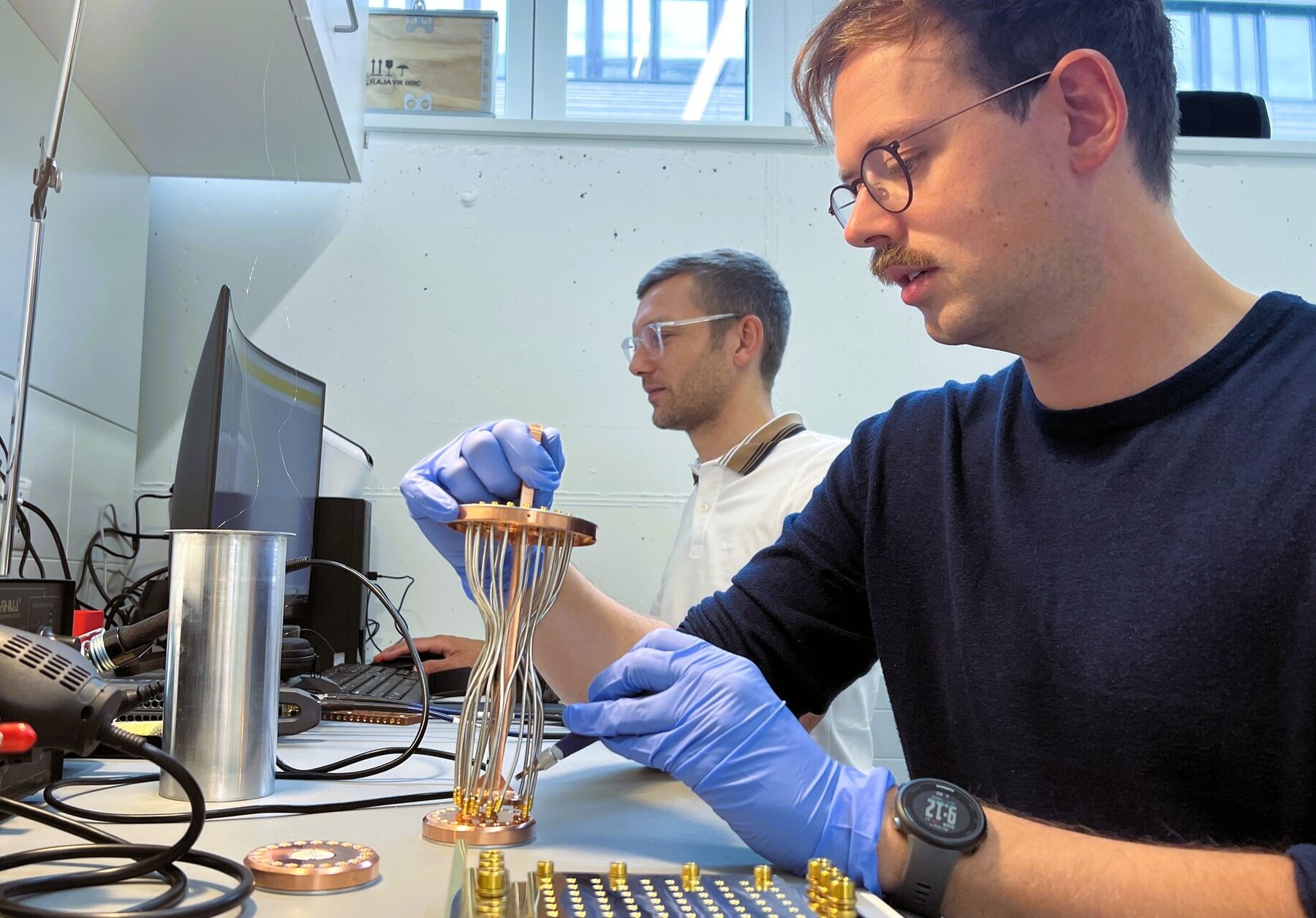
Johannes Herrmann: At YQuantum, we develop specialized components that enable the next generation of quantum computers. These use qubits from superconducting oscillating circuits that are cooled to temperatures close to absolute zero (-273 °C) in so-called ”cryostats" in order to make their quantum properties usable. Our development and manufacturing facilities are located in the Innovaare Park in Villigen.
3. “Quantum” is a buzzword that is often heard in the world of technology and start-ups – and rightly so? Will quantum computing change our lives in the same way as AI?
Christian Schönenberger: Quantum computing is certainly one of the technologies with the potential to change our lives in a lasting and positive way. It could have an enormous impact, particularly in the development of new drugs, and thus save many lives. The synthesis of molecules involves billions of possible combinations and leads to extremely long development times. Simulating a molecular process that would take over 100 years on a classic supercomputer today could be done by a quantum computer in a few hours, as the problem is quantum mechanical in nature.
4. Are there already applications or instruments in industry today that are based on quantum physics?
Christian Jünger: Yes. The laws of quantum physics already play a decisive role in many technologies today. A particularly vivid example is the laser: its strong luminescence is based on the stimulated emission of photons, a quantum mechanical effect first described by Albert Einstein. This amplification effect is also used impressively at PSI in the SwissFEL, the Swiss “X-ray free electron laser,” for time-resolved investigation of materials, among other things.
5. Where do we stand today in the development of quantum computers?
Christian Schönenberger: For quantum computers to solve useful problems, both the number and quality of qubits in a quantum processor must be significantly increased. The current state of development can be compared to the classic transistor-based computers of the 1960s – quantum computing technology is still in its infancy.
6. What is the biggest challenge in scaling?
Johannes Herrmann: A key challenge in scaling is miniaturizing the necessary components so that many qubits can fit into the limited, cooled volume of a “cryostat.” This is where YQuantum comes in: we supply crucial miniaturized components that enable scaling to large and thus commercially viable quantum computers.
7. YQuantum was founded just over a year ago, in September 2024. What is the interim assessment?
Christian Jünger: We can look back on a successful first financial year. With a large number of new, innovative products that we have already sold to leading research groups and companies worldwide, we could not have imagined a better start. The market for quantum computer hardware is expected to grow rapidly in the coming years. Our goal is for YQuantum to play a central role in this emerging market as a major supplier of key components.
8. The renowned American university Berkeley recently entered into a partnership with you. But you also work closely with PSI and the University of Basel. Why is proximity to universities so important?
Johannes Herrmann: Much of the development of quantum computers still takes place at leading universities such as UC Berkeley, PSI, and ETH Zurich. Therefore, partnerships with these institutions are essential for us to stay at the cutting edge of research.
9. Your company is based at Park Innovaare in Villigen. What were your considerations in moving to Park Innovaare? And have your expectations been met so far?
Johannes Herrmann: Park Innovaare in Villigen has a state-of-the-art clean room equipped with the necessary machinery for manufacturing superconducting components. There are very few locations in Switzerland that offer this kind of infrastructure. In addition, the proximity to PSI as an international research institution is of great importance for our innovative product development.
Christian Jünger: In addition, we have access to a startup space there, where we have rented laboratory space for production and development. Thanks to our proximity to other startups, we benefit from direct exchange and a lively community, which is enormously valuable for us as a young company.
10. Was it always clear to you that you wanted to become entrepreneurs?
Johannes Herrmann: Yes, we knew from an early age. We have always been fascinated by how an idea can be turned into something real that helps people and opens up new possibilities.
Christian Jünger: We feel particularly motivated in the field of quantum computing: we have the opportunity to help build a completely new technology of the future, and we wanted to pursue this path independently from the very beginning.
YQuantum
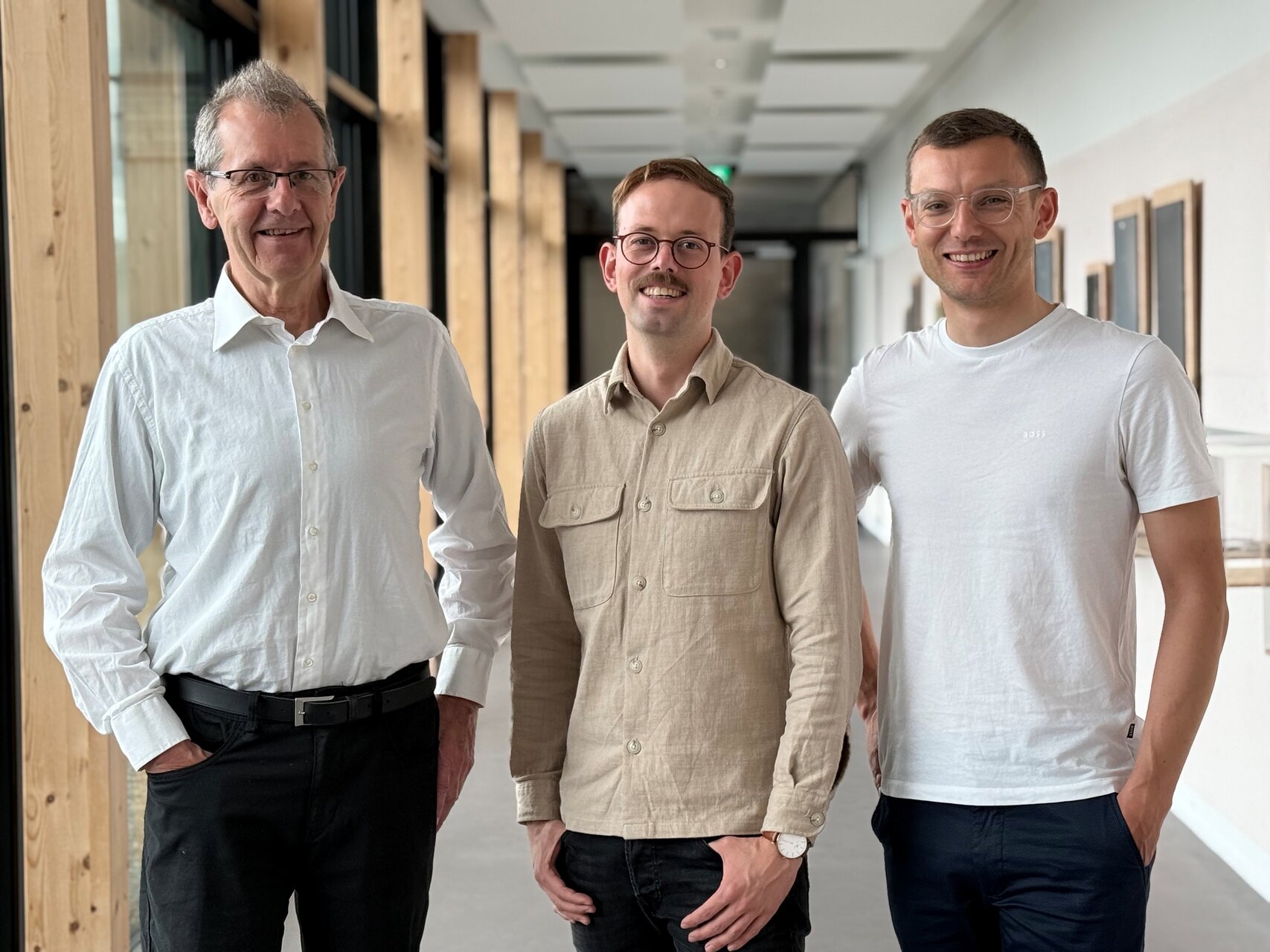
Founded in September 2024, YQuantum is a Swiss quantum hardware startup with the goal of developing integrated components that will pave the way for large-scale quantum computing. The founding team consists of three physicists: Dr. Christian Jünger, Dr. Johannes Herrmann, and Prof. Christian Schönenberger. YQuantum is an official startup of the University of Basel and is based at the Switzerland Innovation Park in Villigen, right next to the Paul Scherrer Institute PSI. www.yquantum.ch